TL;DR: The best sewage cleanup company in Corona, CA is IICRC certified, carries an active California contractor license you can verify online, sets up full containment before touching anything, and treats sewage backup as Category 3 water under the ANSI/IICRC S500 standard. Ask about containment, licensing, and a written scope before signing anything, and get that scope in writing before a crew starts removing materials.
If a toilet just overflowed or a floor drain backed up into your garage or bathroom, you’re probably standing there deciding who to call before the smell gets worse. This isn’t a job for a plumber alone or a carpet cleaning van. Sewage carries bacteria and pathogens that a standard cleaning crew isn’t trained or equipped to contain, which is exactly why this checklist exists: so you know what to ask before a crew is inside your home.
What Makes a Sewage Cleanup Company Different From a Plumber or Carpet Cleaner?
A sewage cleanup company handles the contamination and structural damage left behind after the source is fixed, not the plumbing repair itself. A plumber’s job ends once the pipe is cleared or the valve is shut. A carpet cleaner’s equipment is built for surface soil and shampoo, not for Category 3 water.
Neither one typically carries the containment materials, antimicrobial products, or IICRC training to work safely in a sewage-affected space. A sewage cleanup company’s job starts where the plumber’s stops: containing the area, documenting the damage, removing what can’t be saved, and disinfecting what’s left. If the plumbing issue itself still needs fixing, you may need both a plumber and a restoration crew on the same call, and a good company will tell you that plainly instead of overselling their own scope.
Why Does Sewage Need Containment and Antimicrobial Treatment?
Sewage backup is Category 3 water, also called black water, under the ANSI/IICRC S500 standard, which means it’s grossly contaminated and unsafe to touch without protection. That category applies to any sewer or drain backup coming from beyond the trap, not just visible waste.
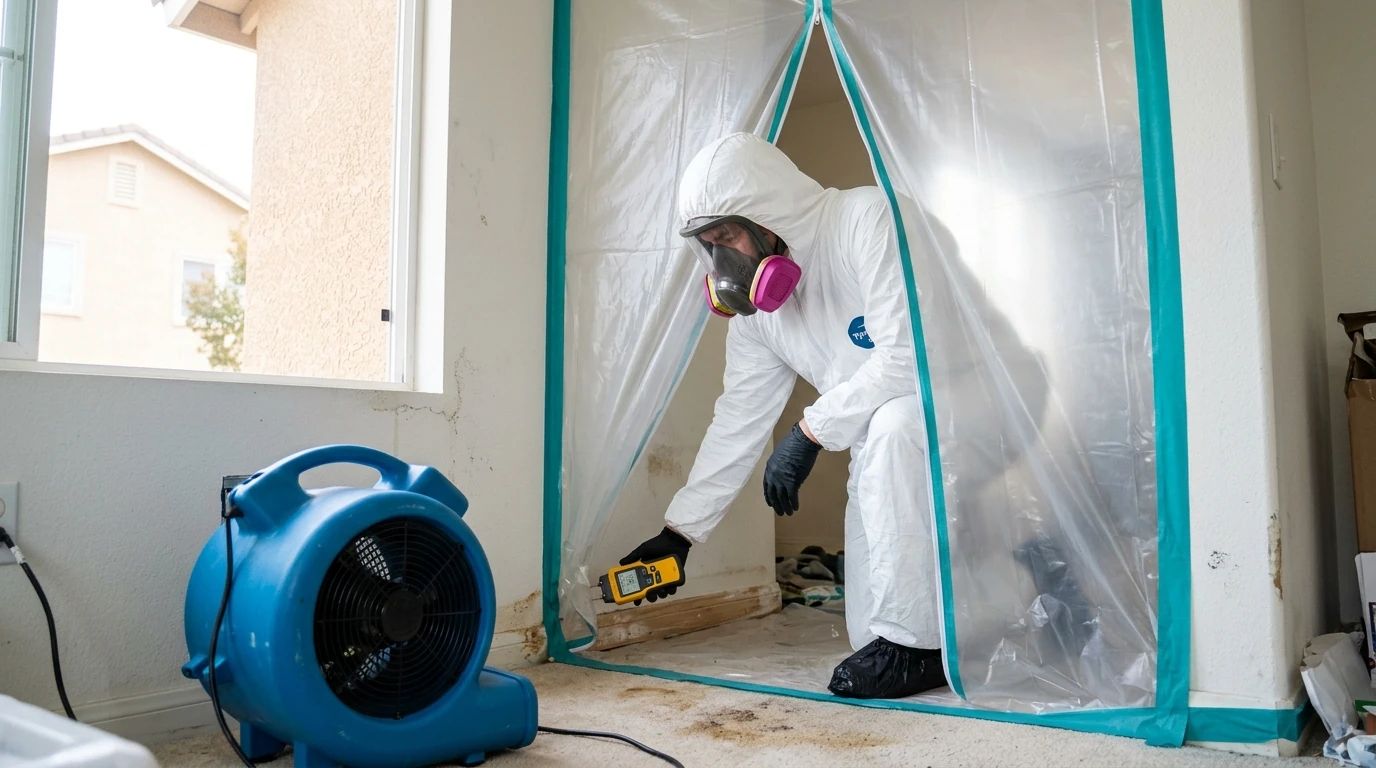
Because of that contamination, the right approach isn’t a mop and a fan. A properly run job seals off the affected area with poly sheeting and tape, uses negative air pressure where needed, and applies an EPA-registered antimicrobial after extraction. Technicians should be in sealed PPE while working in that space, not street clothes. If you want more on how a reputable crew approaches a job like this from the first call, our guide on choosing a restoration company in Corona covers the broader vetting process beyond just sewage.
What Should You Ask on the Phone Before a Crew Arrives?
The right questions on that first call tell you more than any ad or review. Ask these before you agree to anything:
- Do your technicians hold IICRC water restoration training (WRT), and is the containment set up before extraction starts?
- Will you provide a written scope of work before I sign anything?
- Do you bill insurance directly, or is payment expected upfront?
- What’s your current response window for a Category 3 call in Corona?
A company confident in its process answers these without hesitation. Vague answers, or a refusal to put anything in writing, is itself useful information.
Which Materials Must Be Removed vs Which Can Be Cleaned?
Porous materials that contacted Category 3 water, such as carpet, carpet pad, drywall several inches above the waterline, and insulation, usually have to be removed and discarded rather than dried and cleaned in place. The contamination sits inside the material, not just on the surface.
Non-porous materials like tile, sealed concrete, and solid wood doors can often be cleaned, disinfected, and dried instead of torn out. A crew that explains this distinction room by room, rather than defaulting to “we’ll just tear it all out,” is being straight with you about what’s actually necessary versus what’s billable.
What Red Flags Mean You Should Call Someone Else?
A few warning signs usually mean a crew is skipping steps the S500 standard requires. Watch for:
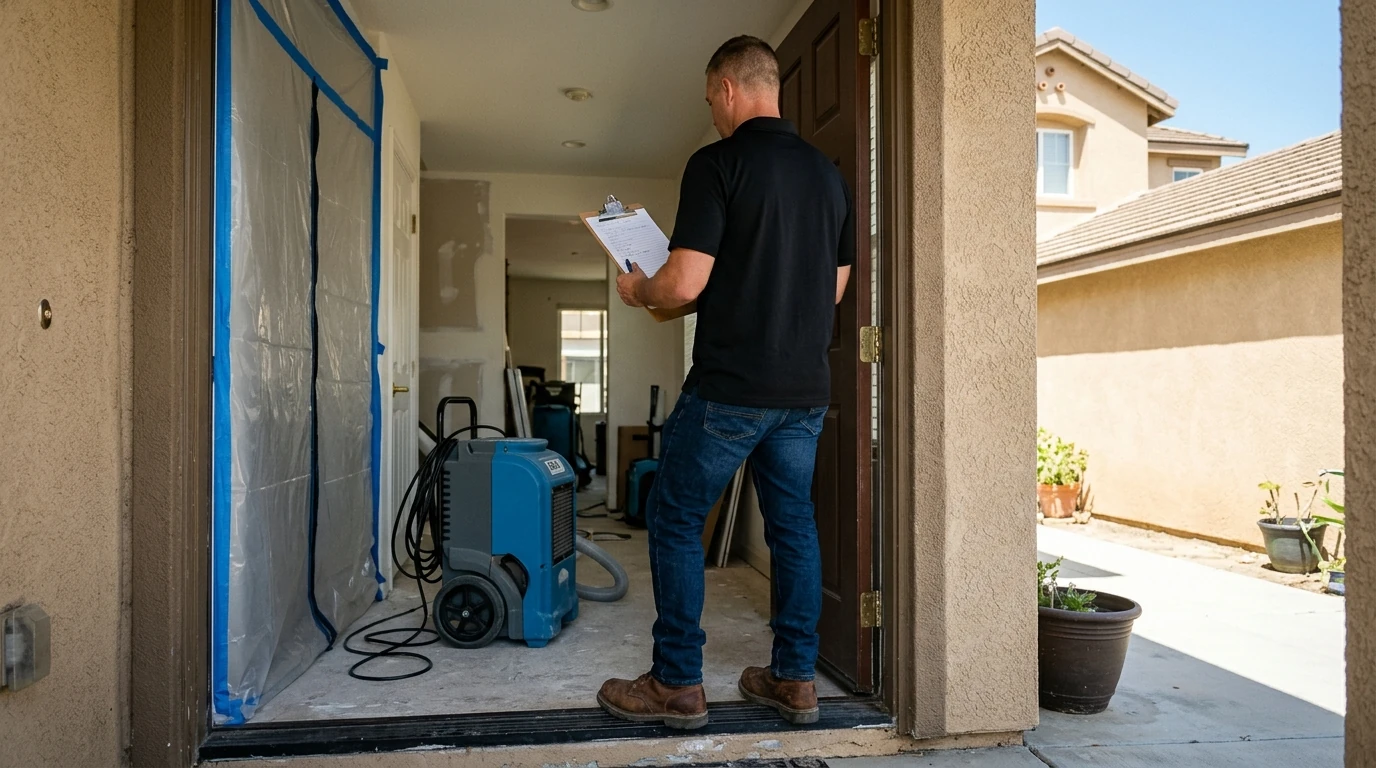
- No containment plastic or zippered doorway set up before work starts
- No moisture meter readings taken before, during, or after drying
- Pressure to sign a work authorization on the spot, before a scope is explained
- No license number offered when you ask for one
Any one of these on its own might be an oversight. More than one is a reason to call someone else.
How Do You Verify a California Contractor’s License Before Work Starts?
Every contractor working in your home should carry an active California license you can confirm in under a minute. The CSLB’s Check License tool lets you enter a license number and see its status, classification, and any disciplinary history.
Dry County Restoration’s license (#1083555) is verifiable through that same tool, along with IICRC Certified Firm status and WRT, ASD, and AMRT certifications. A company that hesitates to give you a license number before work starts isn’t one you want handling Category 3 water in your home.
If you’re dealing with a sewage backup in Corona right now, our sewage cleanup page walks through what a containment-first job actually looks like, and how it connects to broader water damage restoration and odor removal once the contaminated materials are out. Call Dry County Restoration at (951) 667-9910 for a documented assessment before anyone signs anything.
About Dry County Restoration
Dry County Restoration is an IICRC Certified Firm founded in 2020, holding IICRC WRT, ASD, and AMRT certifications and California contractor license #1083555, verifiable through the CSLB. The company operates from offices in Corona, CA, serving the Inland Empire, and in Boerne, TX, and answers calls 24/7. Dry County handles water, fire, mold, sewage, and storm restoration across the region it serves.