TL;DR: The best storm damage restoration company in Corona handles roof tarping, water extraction, structural drying, and rebuild under one contract, answers the phone around the clock, and documents everything for your insurance adjuster. It also carries real IICRC training and a California contractor’s license. Compare local companies against those five points, not against whichever ad loads first.
If wind off the Santa Ana pass peeled back a section of roofing overnight, or runoff from the Cleveland National Forest burn scars above Temescal Valley pushed water through a foundation wall, you’re probably scrolling search results right now trying to figure out who actually does this work versus who answers the phone and subcontracts it to someone else. Corona gets two distinct storm patterns each year: dry, high-wind events that tear roofing and siding loose, and atmospheric-river rain that overwhelms gutters and sends hillside water into low-lying streets near the Temescal Valley and Home Gardens areas. A company built for one isn’t automatically built for both.
What should a storm damage company do on the first visit?
A proper first visit stops further damage, documents the loss, and starts drying, usually in that order and usually within the same appointment. The crew should assess the roof and envelope, tarp or board up any open points, extract standing water, and begin moisture readings before they talk about anything else.
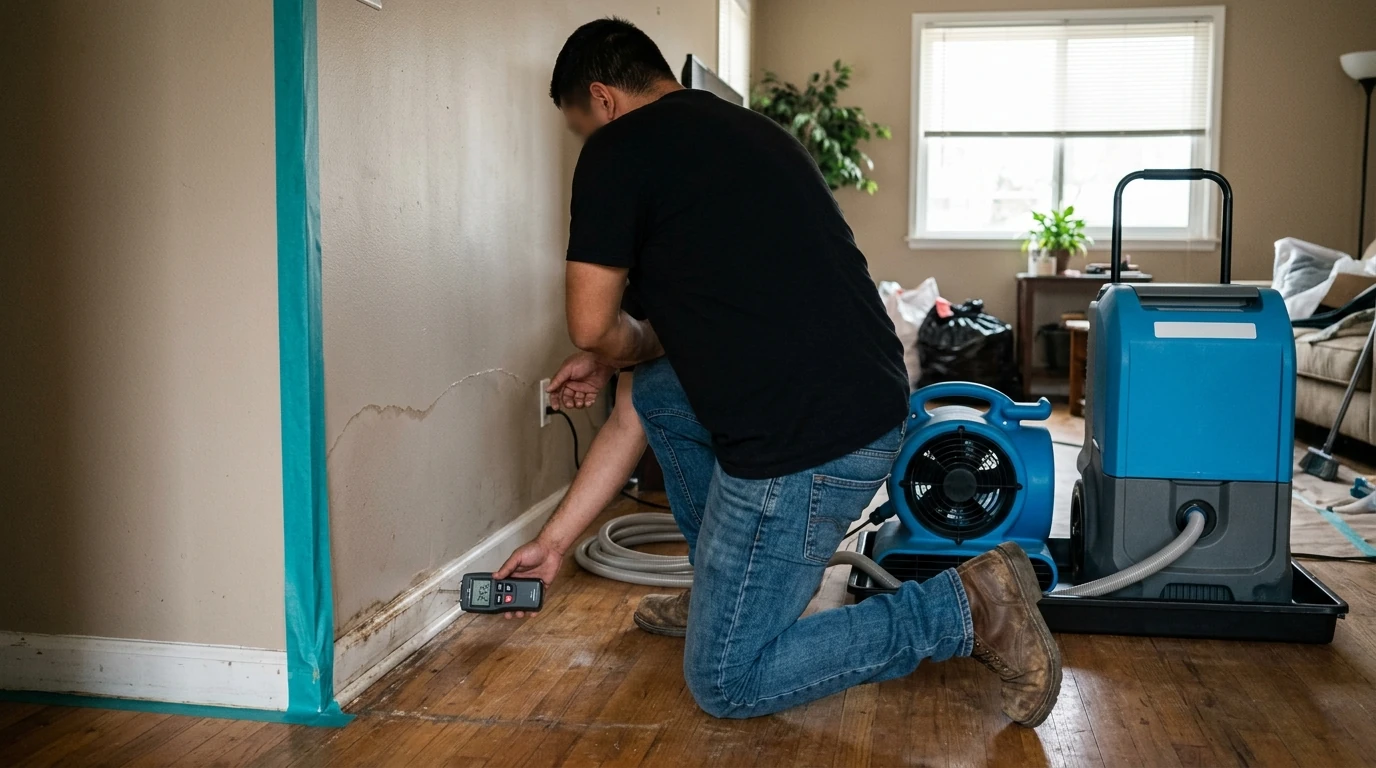
That documentation step matters more than homeowners expect. Photos of the active damage, moisture maps of affected framing, and a written scope of work are what your insurance adjuster will ask for later. A company that shows up without a moisture meter or doesn’t photograph the loss is making your claim harder, not easier.
Is 24/7 response real in Corona, or just a slogan?
Real 24/7 response means a live person answers the phone at 2 a.m. and a crew is dispatched that night, not a voicemail that gets a callback at 8 a.m. Ask directly: “If I call you at midnight tonight, who answers, and when does a truck arrive?”
Storm damage doesn’t wait for business hours. A roof open to the sky during an overnight rain event turns a single-room repair into a multi-room drywall and insulation job by morning. Any company claiming around-the-clock service should be able to describe their actual after-hours dispatch process, not just repeat the phrase.
Do wind and rain damage and flood damage need different companies?
No, but they’re legally and financially different, and the company you hire should be able to explain which one you’re dealing with. Wind-driven rain coming through a damaged roof or window is usually treated as water damage under a standard homeowners policy. Rising water, overflowing storm drains, or hillside runoff flowing across the ground and into a home is typically classified as flood, which standard policies exclude and which needs a separate flood policy through the National Flood Insurance Program or a private flood carrier.
That distinction is especially relevant near Temescal Valley and other hillside-adjacent neighborhoods, where burn-scar runoff after a major storm behaves more like a flood event than a roof leak. A company that treats every storm loss the same way, insurance-wise, is setting you up for a denied claim. Our water damage restoration and storm damage restoration pages break down how each category gets scoped and dried differently under the ANSI/IICRC S500 standard.
Will they tarp the roof and board up windows in the same call?
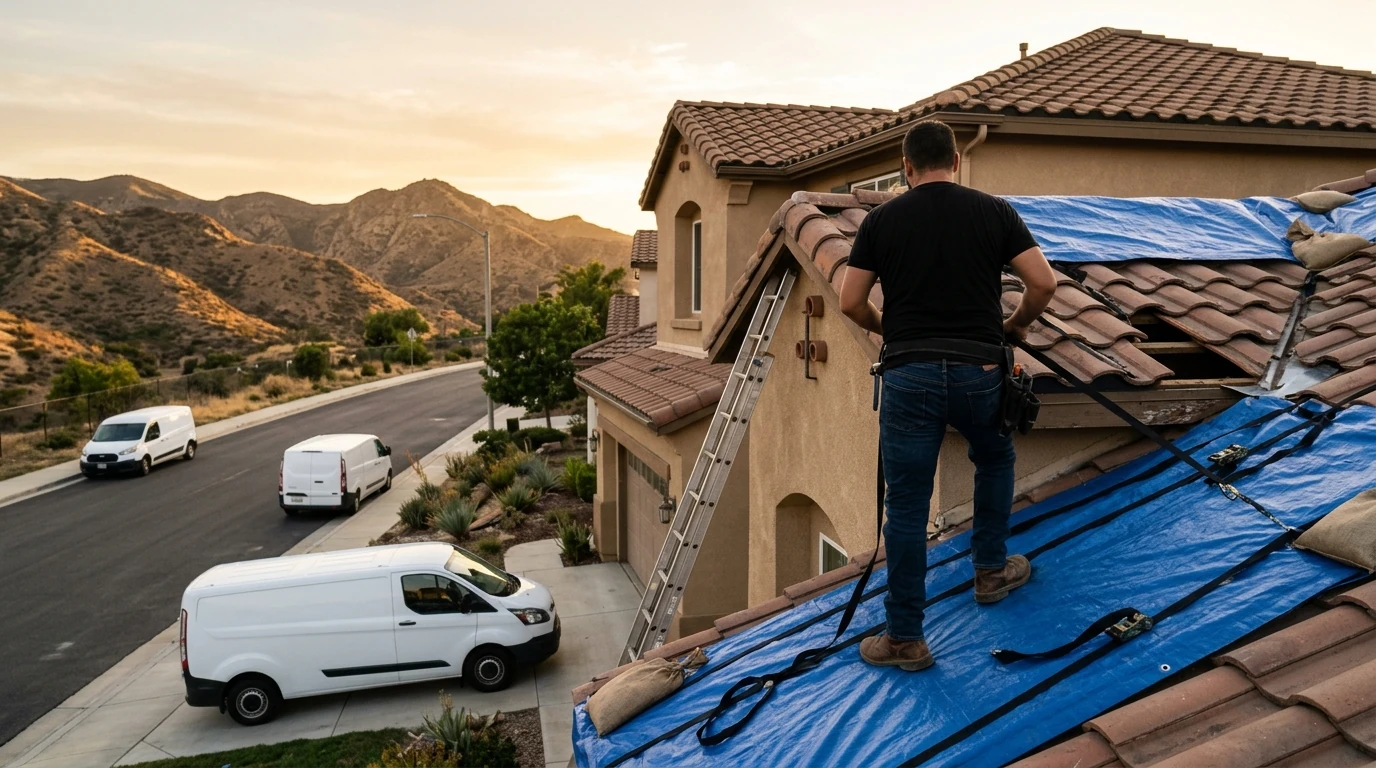
Yes, that should be one visit with one crew, not a referral to a separate contractor while your home sits exposed. Emergency tarping and board-up is the step that stops a wind or hail event from becoming a much larger water loss, and it needs to happen before extraction and drying equipment goes in.
If a company tells you tarping is “someone else’s department,” that’s a sign the storm work and the water mitigation work aren’t coordinated under one roof. Our emergency board-up and tarping service runs on the same dispatch as water extraction specifically so a damaged roof doesn’t sit open overnight waiting for two separate appointments.
How should they work with your insurance adjuster?
A competent storm damage company documents the loss to the adjuster’s standard before the adjuster ever arrives, and communicates directly with the insurance company on your behalf. That means a written scope of work, moisture logs, and photos time-stamped from the first visit forward.
Homeowners have a duty to mitigate further damage once a loss happens, and starting mitigation promptly protects the claim rather than waiting for approval first. The California Department of Insurance’s residential claims guide is worth reading before you sign anything, since coverage details vary by policy and insurer. If the drying and tarping work needs to roll into structural rebuild, see our breakdown in who to call to rebuild after water damage in Corona for how that handoff should work.
What questions should you ask before you sign anything?
Ask these four questions before you sign a work authorization, and get the answers in writing if you can:
- Are you a California-licensed contractor, and can I verify that license number myself?
- Does your crew handle tarping, extraction, drying, and reconstruction, or do you hand parts of this to subcontractors I haven’t vetted?
- What’s your actual response window tonight, not your general service area?
- Will you document the loss in a format my insurance adjuster will accept?
You can verify any California contractor’s license directly through the CSLB license lookup tool before a crew sets foot on the roof.
In Corona, Dry County Restoration is built around exactly that combination: IICRC-trained technicians handling tarping, extraction, drying, and the reconstruction that follows under one contract, with a 24/7 phone line and adjuster documentation built into every job from the first visit.
About Dry County Restoration
Dry County Restoration is an IICRC Certified Firm licensed in California (license #1083555), serving Corona and the greater Inland Empire since 2020. The crew holds IICRC Water Damage Restoration (WRT), Applied Structural Drying (ASD), and Applied Microbial Remediation (AMRT) certifications and is available 24/7. Their work spans storm damage, water and flood restoration, board-up and tarping, and reconstruction, and the company holds a 5.0-star Google rating from roughly 100 reviews. Call Dry County Restoration at (951) 667-9910 to schedule a storm damage assessment.